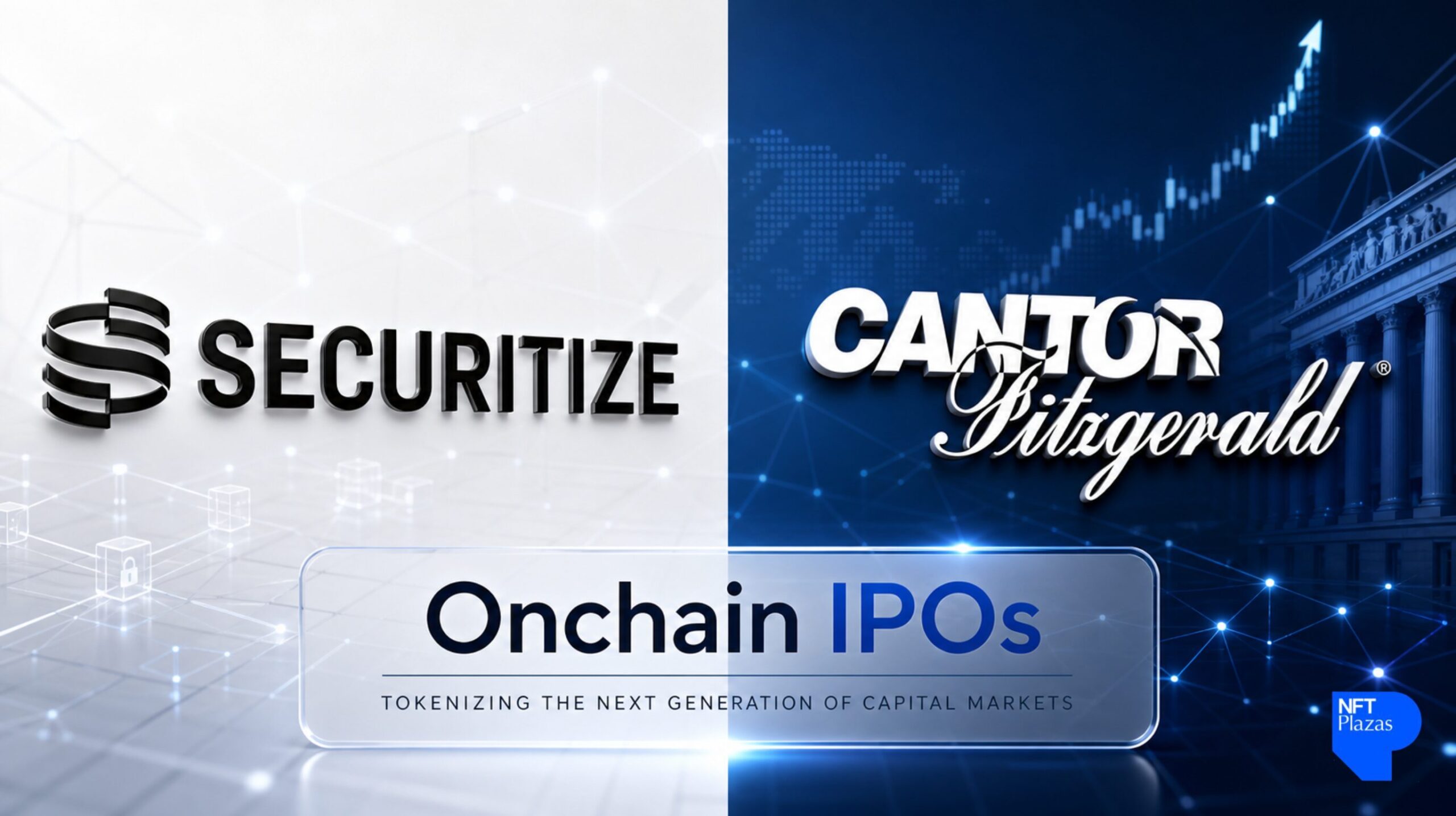
Cantor Fitzgerald and Securitize announced a partnership on July 15 to bring IPOs and follow-on offerings by public companies onto blockchain infrastructure, in an effort to expand tokenization from secondary market trading to the primary capital-raising process of traditional capital markets.
Cantor Turns to Securitize for On-chain IPOs
Cantor Fitzgerald is attempting to forge a new path for traditional capital markets by partnering with Securitize to bring IPOs and follow-on offerings of public companies onto blockchain infrastructure. In their July 15 announcement, the two parties stated that this model will still operate within the framework of traditional capital markets, but will use tokenization to issue, distribute, and manage securities in a more digital manner.
Securitize and Cantor Fitzgerald are bringing IPOs and follow-on offerings onchain.
Together, we’re creating a regulated way for companies to raise capital and conduct IPOs using blockchain-based infrastructure. pic.twitter.com/lWmaXrvT7E
— Securitize (@Securitize) July 15, 2026
If successfully implemented for IPOs, it will touch the very core of equity capital markets, where the primary capital-raising process still relies heavily on multiple layers of intermediaries and highly manual post-trade verification processes. For Cantor, this is a way to transition its ECM and trading capabilities onto a new infrastructure layer; for Securitize, it is an opportunity to push tokenization technology deeper into public securities issuance.
How On-chain IPOs Would Work
According to the announcement, Cantor will be in charge of market structure and distribution, while Securitize will provide the infrastructure for issuing, distributing, and servicing tokenized securities. In this model, the blockchain does not replace the entire IPO process but instead serves as the infrastructure layer for recording, transferring, and managing ownership rights.
Investors will still participate in an offering following the logic of traditional capital markets, but the securities can be represented as tokens on the blockchain. Securitize emphasized that the implementation remains within an “established capital markets framework,” meaning it must still adhere to existing requirements regarding offerings, custody, settlement, and transaction oversight.
The inclusion of Securitize Markets, LLC, an SEC-registered broker-dealer, in this structure demonstrates that the model is designed to operate within the existing regulatory system. The novelty lies in how the infrastructure is more digitalized, not in bypassing securities regulations.
Securitize’s Track Record
Securitize was founded in 2017 and has built a highly distinct position in the tokenized assets sector. According to Securitize, the company now manages over $5 billion in assets as of July 2026 and stated that it has tokenized over $4 billion in assets. Among its most prominent products is BlackRock’s BUIDL, a tokenized treasury fund that has been closely watched by the market over the past year.
The company also recently went public under the ticker SECZ following a SPAC merger deal involving Cantor Fitzgerald, with a valuation of approximately $1.25 billion, according to previously reported sources. Securitize shares rose following the partnership news with Cantor, showing that investors are viewing this agreement as part of the company’s expansion story, rather than just a media-focused announcement.
Why Wall Street Is Moving Toward Tokenization
The Cantor-Securitize agreement comes at a time when Wall Street is ramping up broad-scale tokenization testing. The Wall Street Journal (WSJ) reported that the DTCC is launching a trial to tokenize stocks and Treasury bonds with nearly 40 participating institutions, including JPMorgan, Goldman Sachs, BlackRock, Vanguard, and the NYSE. The participation of many major names indicates that tokenization is gradually shifting from an experimental topic to a direction for upgrading financial infrastructure.
Wall Street is interested in tokenization because traditional issuance and trading processes still pass through many intermediary layers, creating friction in ownership registration, settlement, and distribution. Tokenization is expected to reduce these frictions, increase tracking capabilities, and expand distribution reach while remaining within existing regulatory frameworks.
What to Watch Next
This model will only be proven once a first issuer actually uses it. The agreement currently only opens up a path for on-chain IPOs and follow-on offerings, while the actual impact will only become clear once the first transaction occurs.
Operational details will also determine how far the model can go, from voting rights, dividends, and transfer restrictions to final settlement.
Another point to watch is whether on-chain offerings will start with follow-on offerings or go straight into primary IPOs. If follow-on offerings prove effective, it could serve as a stepping stone for larger deals later on.




Leave feedback about this