
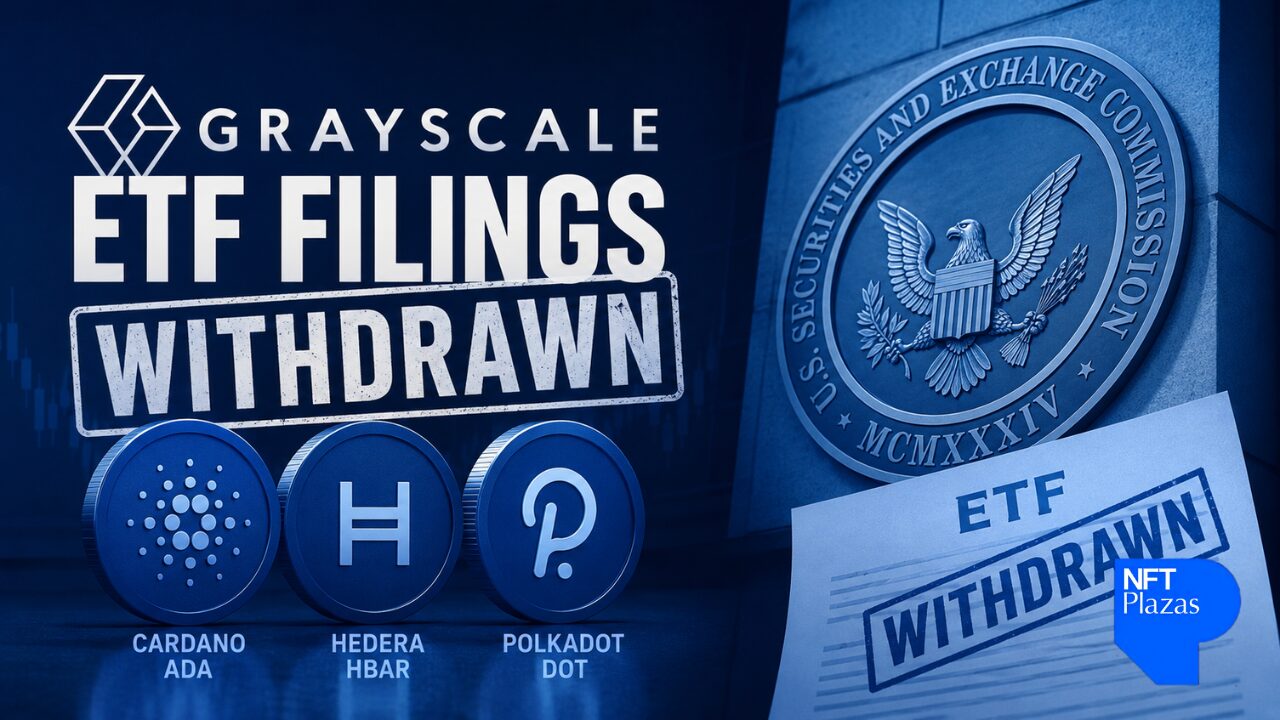
Grayscale Investments has withdrawn registration statements for three proposed spot crypto exchange-traded funds (ETFs) tied to Cardano’s ADA, Hedera’s HBAR and Polkadot’s DOT, according to filings submitted to the U.S. Securities and Exchange Commission (SEC) on Aug. 7.
The withdrawals cover the proposed Grayscale Cardano Trust ETF, Grayscale Hedera Trust ETF and Grayscale Polkadot Trust ETF. Grayscale submitted separate Form RW requests asking the SEC to withdraw the respective Form S-1 registration statements.
The filings do not represent SEC rejections. Instead, Grayscale voluntarily requested that the registrations be withdrawn, stating in each filing that the sponsor “does not intend to proceed with the planned distribution” of the trust’s shares.
The three filings were submitted within minutes of one another, with the Cardano registration withdrawn first, followed by Hedera and Polkadot. The documents also make clear that none of the registration statements had become effective. No securities had been issued or sold under the registrations, and no preliminary prospectuses had been distributed.

Grayscale Withdraws Cardano, Hedera and Polkadot ETF Filings From SEC
Grayscale Ends Three Altcoin ETF Plans
The withdrawals close a chapter that began during the wave of institutional interest in single-asset crypto ETFs that followed the approval of spot Bitcoin and Ethereum products in the United States.
Grayscale initially proposed a Cardano ETF in February 2025, followed by its Polkadot ETF later that month. The asset manager filed the corresponding S-1 registration statements for the ADA and DOT products in August 2025, while the Hedera registration followed in September.
The proposed funds were designed as passive investment vehicles intended to provide investors with exposure to the price of their respective cryptocurrencies, less fees and expenses.
The relevant exchange-listing proposals had already been withdrawn. SEC records show that NYSE Arca withdrew the Cardano proposal in September 2025, while Nasdaq withdrew the Polkadot and Hedera proposals in November. The latest Form RW submissions therefore remove the separate Securities Act registration statements associated with the proposed trusts.
The distinction is important: withdrawing an S-1 does not mean the SEC rejected the products. It simply means Grayscale has decided not to proceed with those particular registrations.
No Reason Given for the Withdrawals
Grayscale did not provide a specific explanation for the decision in the filings.
That leaves several possible interpretations, including changing market conditions, product demand, regulatory strategy or a decision to restructure its ETF pipeline. However, the filings themselves do not establish that any one of these factors caused the withdrawals.
The move comes as the U.S. crypto ETF market has become increasingly competitive. Asset managers are now pursuing a broader range of products, while regulators have also introduced generic listing standards for certain commodity-based trust shares, potentially changing how future crypto ETFs can be brought to market.
As a result, withdrawing an older registration does not necessarily mean Grayscale has permanently abandoned exposure to ADA, HBAR or DOT. The company could theoretically pursue a new structure or registration in the future.
Altcoin Weakness Adds Pressure
The withdrawals also arrive after a difficult period for the three underlying tokens.
According to the data provided in the filings-related reports, ADA is down more than 41% year to date, while DOT has fallen roughly 54% and HBAR about 35%. From the period when Grayscale initially announced its ETF plans in early 2025, the declines have been considerably deeper, with ADA experiencing a drawdown of around 70%, DOT approximately 80% and HBAR more than 70%.
Those losses highlight the challenge facing asset managers seeking to build dedicated investment products around individual altcoins. While an ETF can make an asset easier for traditional investors to access, demand for the product ultimately depends on investor interest, liquidity and the perceived long-term potential of the underlying token.
For ADA, HBAR and DOT holders, the withdrawal removes a potential institutional-access catalyst, although it does not directly change the underlying networks or their fundamentals.

All three tokens have been losing value over the last few month (Source: DefiLlama)
Grayscale’s ETF Strategy Continues
Despite the three withdrawals, Grayscale’s broader ETF strategy remains active.
The company continues to offer a range of crypto investment products, including funds providing exposure to Bitcoin and Ethereum, as well as newer products involving staking and other digital assets. SEC records also show that several other proposed Grayscale altcoin products remain at various stages of the registration process.
Among them are proposed products linked to assets including Bittensor, Aave, BNB, NEAR and Zcash. Meanwhile, Grayscale has advanced certain staking-focused products, demonstrating that the company is not abandoning the broader crypto ETF market.
The latest withdrawals therefore appear more significant as a pruning of Grayscale’s product pipeline than as a retreat from crypto ETFs altogether.
For now, the SEC filings provide no indication that Grayscale plans to replace the three withdrawn registrations. They simply confirm that the asset manager has chosen not to proceed with the existing ADA, HBAR and DOT offerings.
The decision leaves investors watching closely for whether Grayscale eventually returns with revised filings — or whether the withdrawals mark a more permanent shift in which altcoins the asset manager believes can attract meaningful institutional demand.







Leave feedback about this