
Key Takeaways
- DBS found 88% of major companies are using or testing tokenized money, with 67% already deploying it.
- Stablecoins lead DBS respondents’ tokenized money preferences at 63%, ahead of tokenized deposits.
- DBS says corporations increasingly expect banks to support round-the-clock payments and settlement.
DBS Survey Reveals How Far Tokenized Money Has Advanced
A recent survey commissioned by Singapore’s DBS Bank reveals that 88% of large corporations have either adopted or begun testing tokenized money, marking a substantial shift in how multinational businesses approach payments, liquidity and financial operations.
The research, titled “The Great Rewiring: Money in a New Order,” surveyed 422 senior finance and business executives across 11 markets between June and July 2026. EY conducted the research for the financial giant DBS, focusing on companies generating more than $500 million in annual revenue.
The breakdown tells a more interesting story. Some 24% have deployed tokenized money at scale, while 43% already use it in selected markets. Another 21% are conducting pilots or proofs of concept. That means roughly two-thirds have progressed beyond experimentation into some form of live deployment. Fiat-pegged stablecoins dominate corporate preferences, attracting 63% of respondents, followed by tokenized deposits at 53% and tokenized money market funds at 52%.
What Tokenization Actually Means for Corporate Money
In finance, tokenization involves representing money, securities, or ownership rights as digital tokens recorded on a blockchain network or another distributed ledger. Rather than moving funds exclusively through conventional banking databases and settlement systems, institutions can transfer digital representations of value across compatible networks.
The distinction matters. A stablecoin generally represents a claim or arrangement tied to a reference asset, frequently the U.S. dollar, while a tokenized bank deposit represents a deposit liability issued by a financial institution. Tokenized money market funds, meanwhile, represent interests in investment funds rather than spendable cash.
Behind these instruments sit smart contracts, software programs that execute predefined instructions. Depending on the network and legal structure, these contracts can automate transfers, enforce transaction restrictions, and coordinate payments without requiring every step to pass through traditional intermediaries.
Consider a multinational corporation transferring funds between subsidiaries in Singapore and New York. Conventional banking arrangements can involve operating-hour restrictions, intermediary institutions, and delayed settlement. Tokenized money can allow transfers outside those windows, provided participating institutions, networks, and compliance systems support the transaction.
Tokenization doesn’t eliminate the need for banks, custodians, or regulatory oversight, nor does putting an asset on a blockchain automatically guarantee liquidity or immediate settlement. The legal rights attached to each token, the quality of its backing, and the infrastructure connecting participants remain decisive.
Stablecoins and Round-the-Clock Payments Gain Traction
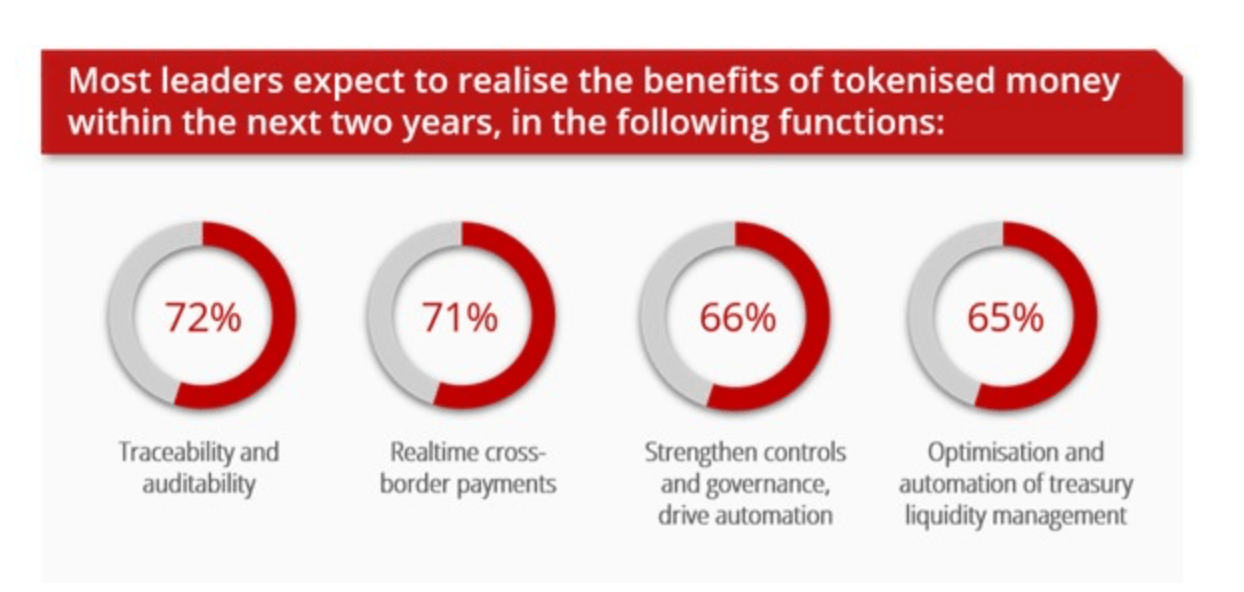
Companies aren’t chasing blockchain technology simply for novelty. DBS says they’re looking to fix longstanding problems involving settlement delays, fragmented payment networks, and trapped liquidity. Some 72% anticipate improvements in transaction auditability, and traceability, while 71% expect faster cross-border payments. Another 66% identify stronger internal controls, and 65% anticipate better treasury liquidity management, according to the DBS survey.
The bank’s findings arrive as international commerce grows increasingly complicated. More than three-quarters of surveyed executives reported heightened currency and energy price volatility, unpredictable settlement outcomes, and operational pressures. Meanwhile, 78% have expanded their exposure to multiple settlement currencies, reflecting efforts to navigate emerging trade corridors.
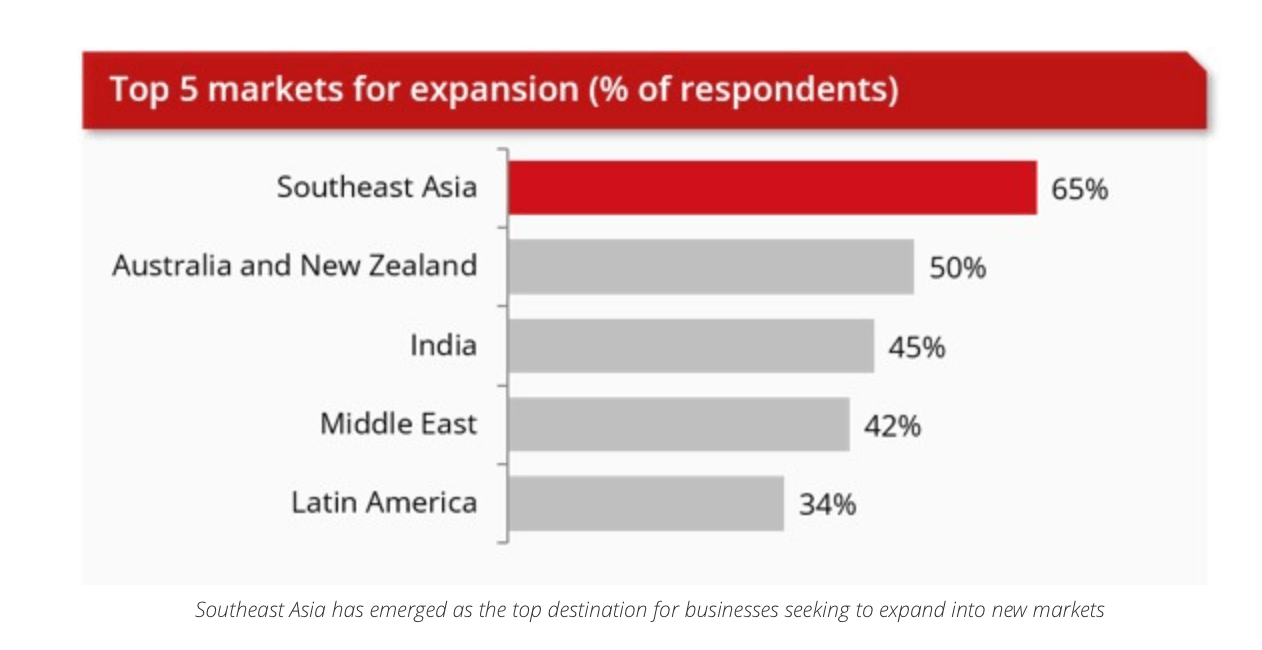
Southeast Asia leads corporate expansion priorities at 65%, followed by Australia and New Zealand at 50% and India at 45%.
Banks Confront a Changing Financial Infrastructure
Despite growing adoption, regulatory uncertainty, security concerns, and integration costs continue to complicate implementation. Fragmented blockchain networks also present interoperability problems, particularly when institutions need to move assets between incompatible systems. Rather than bypassing banks altogether, corporations increasingly want them involved. DBS researchers reveal that some 64% of respondents seek a single banking integration point for tokenized money, while 63% want assistance with pilots and implementation.
DBS launched its Token Services platform in 2024, enabling programmable payments and around-the-clock settlement through permissioned blockchain infrastructure. The bank has also demonstrated weekend cross-border dollar transfers with Citi, completing settlement between Singapore and New York within minutes. DBS executive Lim Soon Chong acknowledged the unexpected pace of adoption, stating:
“We know that tokenization is increasing, and it’s going mainstream. But the pace whereby it is going mainstream is much faster than we expected.”
The bank expects investment in tokenized infrastructure to potentially match or exceed spending on conventional payment rails within two to three years. For banks, the emerging contradiction is difficult to ignore: Corporate customers increasingly want money that moves beyond banking hours, but still expect banks to provide the infrastructure.






Leave feedback about this