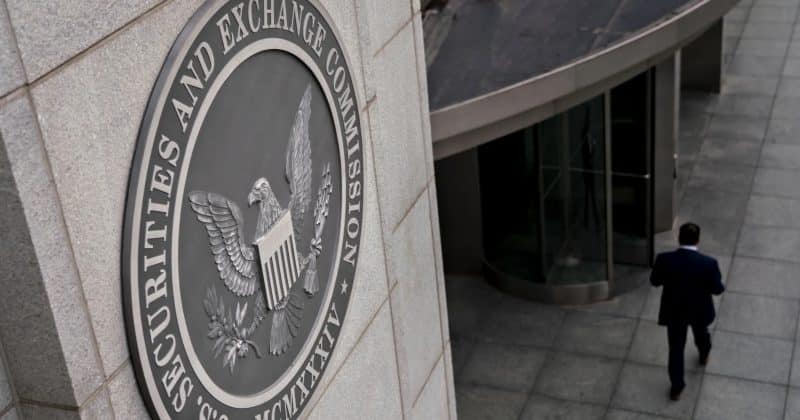
SEC Chair Paul Atkins said Tuesday that the agency is implementing a token taxonomy and investment contract interpretation aimed at ending years of uncertainty over when crypto assets fall under federal securities laws.
Speaking at the DC Blockchain Summit on March 17, Atkins said the framework would classify digital commodities, digital collectibles, digital tools, and payment stablecoins under the GENIUS Act as categories that are not deemed securities. He said only digital securities, meaning tokenized forms of traditional securities, would remain clearly subject to securities laws under the new interpretation.
The SEC’s broader guidance issued the same day also said the interpretation addresses activities including Bitcoin mining, airdrops, and protocol staking.
Atkins also said a crypto asset that is not itself a security could still fall under federal securities laws if it is offered and sold as part of an investment contract. He said the SEC’s interpretation would address when that investment contract ends, which could free the underlying asset from the agency’s statutes once essential managerial efforts have been completed or permanently ceased.
According to Atkins, a key part of that framework is requiring project teams to clearly disclose the representations and promises tied to those efforts so buyers understand the rights they are purchasing.
Beyond that interpretive framework, Atkins previewed what he called Regulation Crypto Assets, a broader rulemaking vision that would create what he described as compliant paths forward for crypto issuers and developers.
He said the SEC should consider a startup exemption that could let developers raise up to $5 million over as long as four years, as well as a fundraising exemption that could allow up to $75 million in a 12 month period with required disclosures. He also proposed an investment contract safe harbor that would provide more certainty around when certain crypto assets are no longer subject to securities laws.
Atkins said he expects the Commission in the coming weeks to consider releasing such a proposal for public comment. At the same time, he stressed that only Congress can fully future proof crypto regulation through comprehensive market structure legislation, pointing to bipartisan work on Capitol Hill and specifically referencing the CLARITY Act as a foundation for the framework he described.





Leave feedback about this