
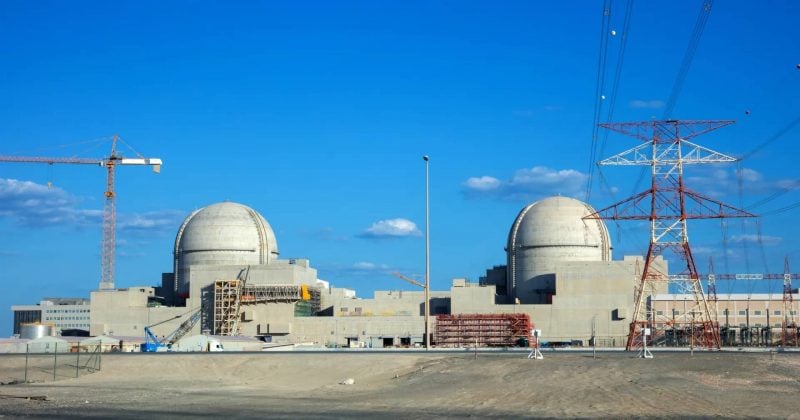
Anwar Gargash, the diplomatic adviser to the UAE President, labeled an attack on the Barakah nuclear power plant an act of terrorism. He called the strike a dangerous escalation and a clear violation of international law, framing it as part of a broader pattern of aggression targeting civilian infrastructure in the Gulf region.
The Barakah plant holds a unique distinction. It is the Arab world’s first commercial nuclear power facility, operated by Nawah Energy Company.
A pattern of civilian targeting
Gargash’s condemnation did not exist in a vacuum. He has previously pointed to a staggering figure: 1,900 attacks on the UAE by Iranian missiles and drones, a number he reported before an Iranian official later retracted it.
Gargash has also stated that only 7-15% of Iranian missile and drone targets are connected to US military interests. The vast majority, according to his assessment, are aimed squarely at civilian infrastructure.
Sheikh Abdullah bin Zayed, the UAE’s foreign minister, emphasized that the UAE will not be blackmailed by terrorists amid ongoing attacks targeting civilian areas.
Yousef Al Otaiba, the UAE’s ambassador to the United States, has pushed for a comprehensive solution that addresses the full range of Iranian threats. His argument: a simple ceasefire would not be enough. The underlying infrastructure of proxy warfare, missile proliferation, and drone technology needs to be dismantled, not merely paused.
Why a nuclear plant changes the calculus
The Geneva Conventions and additional protocols specifically prohibit attacks on installations containing dangerous forces, including nuclear electrical generating stations, if such attacks would cause severe losses among the civilian population. Gargash’s invocation of international law is not rhetorical flourish. It is a direct legal framework that classifies this kind of strike as a war crime.
Regional stability and market implications
UAE officials have been consistent in their demand for accountability. They want Iran held responsible for attacks on civilians and critical infrastructure, and they want the international community to treat these incidents as what they are: terrorism.







Leave feedback about this