
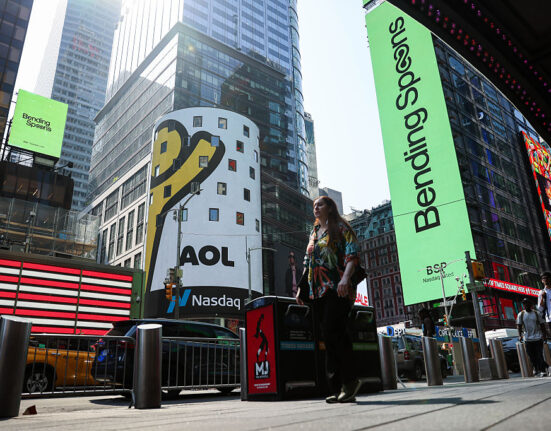
The stock market pushed higher once again this week, with the S&P 500 and Nasdaq in the green, and the Dow Jones staging a massive rally to new all-time highs as of Friday morning. The dollar continues to show strength. Luke Gromen believes a “too strong” dollar will trigger foreign selling of U.S. assets.
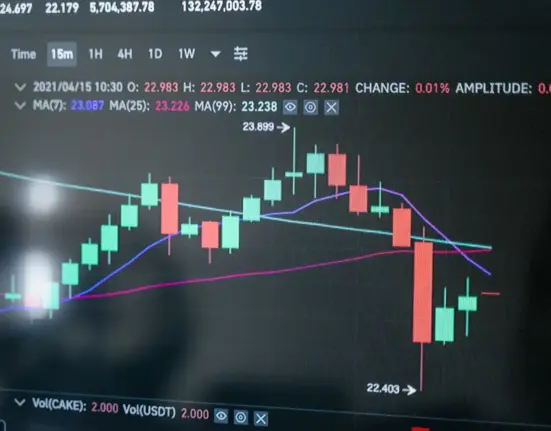
In the digital assets realm, Bitcoin recovered some of its losses but remains in a clear weekly downtrend, currently trading at $61,438 after tradfi markets’ close. Despite Bitcoin spending last week scraping its lowest levels since October 2024, there is hope. Every time BTC has closed two consecutive red 6-month candles, a three-year uptrend has followed, and the second one closes in days. Or how about John Bollinger highlighting a developing ‘W’ pattern in BTC?
The bottom-callers are getting louder. Bluntz says the same weekly bear divergences that nailed the SOL top now cut the other way, and that if you’re bearish on Solana down here you are impaired. AltcoinPsycho, who publicly bought near the SOL bottom last cycle in one of the highest-PnL trades of his career, says we have another chance to do it again, and he’s heavily accumulating spot. That’s all well and good for Solana, but what about Bitcoin? Well, there was the largest single on-chain accumulation of Bitcoin ever recorded.
A good sentiment sign came when billionaire Jeremy Grantham disparaged Bitcoin and crypto on CNBC, saying, “What does crypto do? What’s the use of crypto… There’s no there there.” Later he added, “proof of unnecessary work shouldn’t be worth a bucket of warm spit.” Joe Kernen, who had been cordial up to that point, knocked the billionaire down a few pegs by pointing out his abysmal track record for the past couple decades.
The markets have also been humbling Bitcoin main character Michael Saylor who has been reeling since May when Strategy inexplicably bought back $1.5 billion worth of 0% convertible senior notes due 2029.
This week Strategy’s unveiled a new Digital Credit Capital Framework, which finally addresses the STRC dividend payment issue. It achieves this through a new $2.55 billion USD reserve policy. The framework also authorized up to $1 billion in preferred “Digital Credit” buybacks plus $1 billion in MSTR common buybacks, and a BTC Monetization Program permitting conditional Bitcoin sales of up to $1.25 billion to fund reserves, dividends, and repurchases. Stretch (STRC) got a 50 bps dividend bump to 12%, effective for July, hopefully pushing STRC back toward its $99–$100 par.
Reactions were mostly positive, mainly because STRC is sorted, but some are upset with details. For example, buybacks. In fact Mr. Saylor posted in 2021 that companies repurchasing stock with cash weaken their business, and those buying back stock with debt actually impoverish it. The biggest issue is with Strategy’s enshrined option to sell Bitcoin. OG X poster Light believes they’ve already started.
JPMorgan warned that turning crypto’s biggest buyer into a potential seller introduces a two-way flow risk the market now has to price. Once you write down the conditions under which you’ll sell, traders will game the probability of those conditions being met every time STRC wobbles near par.
Hopefully that will not happen, and (as Jordi Alexander predicts) we will not be talking about Mr. Saylor or Strategy in six months.
And then there’s noise on CT ( Crypto Twitter) about a new memecoin season. Ansem is participating in a Solana memecoin based on his persona. Many celebrated (some in the unseemly ways of past memecoin frenchies), notably exchanges and tracking platforms that benefit from trading activity. Others did not.
One prominent poster said: we’ve got some more retail to kill, or perhaps we should shoot ourselves. The legendary duck sums up the side against this stuff: KOLs extracted the entire space to zero and are now launching celebrity coins again to extract some more. This feels like crypto’s version of Groundhog Day. If a “ memecoin szn” happens without liquidity entering the space predominantly for productive purposes, it means 6 more weeks (months, years?) of the market nuking.
Historically speaking, being the memecoin main character has a short shelf life. If anyone can persist, it should be Ansem, but the odds are not great.
There was another memecoin story, one with implications outside of crypto. Trump disclosed more than $1.2 billion in crypto earnings in his annual filing. Even seasoned crypto degens habituated to this stuff were surprised. TXMC, max-cynical from day one, admitted the man has a way of exceeding expectations, while Dyme, who was willing to forgive a little grift as the cost of pro- crypto policy, drew the line at “ludicrous”.
None of this memecoin nonsense helps the institutions, the suits, or anyone within a stone’s throw of tradfi take crypto seriously. Thank goodness the memecoin shenanigans were offset by real projects doing interesting things, precipitating quality discussions.
The best of these was around Venice raising a $65 million Series A. Venice’s VVV token rallied on the news, but fell after digesting the token-equity split conundrum. Can a project with a representative token grow in value while equity and shareholders exist?
Some believe that token-equity splits like this aren’t defensible in crypto anymore. and more bluntly, tokens with equity do not work. Dankrad piled on with the legal asymmetry: Equity holders have enforceable protections; token holders have trust me bro, we’ll keep buying and burning. Not to mention the fact that the company has a fiduciary duty to maximize value for exactly one of those groups.
Algod agreed with basically all of it: bootstrap through the token, then funnel the value to equity. Voorhees, defending himself online, flipped the critique around: 99.9% of tokens designed to date have failed and will keep failing.
Whoever’s right, the broader vibe shift is unmistakable. NEAR’s co-founder Illia Polosukhin declared token burns a very ineffective way to generate value and is drafting a proposal to move NEAR toward a fixed supply. Crypto participants are growing up. There’s a class action lawsuit against Magic Eden over misleading ME token promises, and crypto natives are creating dashboards to track token revenue versus token emissions. We’re speedrunning tradfi, currently reinventing discounted cash flow analysis from first principles!
Speaking of tradfi, there were several big crypto-related announcements this week. A whole bunch of legacy finance and web2 companies banded together for a new stablecoin called Open USD (OUSD), with zero-fee minting, no volume caps, and nearly all reserve yield shared back to partners instead of retained by a single issuer.
Omid Malekan was not impressed. Scott Melker pointed out that these 140-plus firms in finance just organized to capture that yield for themselves. Pledditor called it an Old Boys Club coming in to topple the moats Tether and Circle built.
Elon Musk announced X Money, the financial leg of X, reportedly launching with 6% APY, up to $10 million in FDIC sweep insurance, unlimited 3% cash back and a physical metal Visa card. Austin Campbell ran the sober evaluation: The 6% APY is promotional and won’t survive contact with math, but $10 million of FDIC coverage, a built-in P2P network riding X’s social graph, and 3% cash back is a genuinely serious fintech product. Notably absent thus far is anything related to crypto.
X Money will have a hard time catching up with other fintech super apps such as Robinhood, which launched its own chain, an Arbitrum-Orbit L2 purpose-built for tokenized assets. Yano was impressed that apps are paying to join the chain versus the opposite. Distribution is king. Case in point: Dydx went from being the leading perp DEX to an L2, to now being an app (with a new name, Arcus) on Robinhood Chain.
How the mighty have fallen. But that’s crypto, baby!
-David Sencil



Leave feedback about this