Key Takeaways
- Senator Lummis said the CLARITY Act includes more than 16 illicit finance safeguards.
- Senator Warren argued the bill, as currently written, would make it easier for adversaries to use cryptocurrency to move illicit funds.
- The debate reflects broader disagreements in Congress over balancing digital asset regulation with anti-money laundering and sanctions enforcement.
Lummis Says CLARITY Act Contains More Than 16 Anti-Money Laundering Safeguards
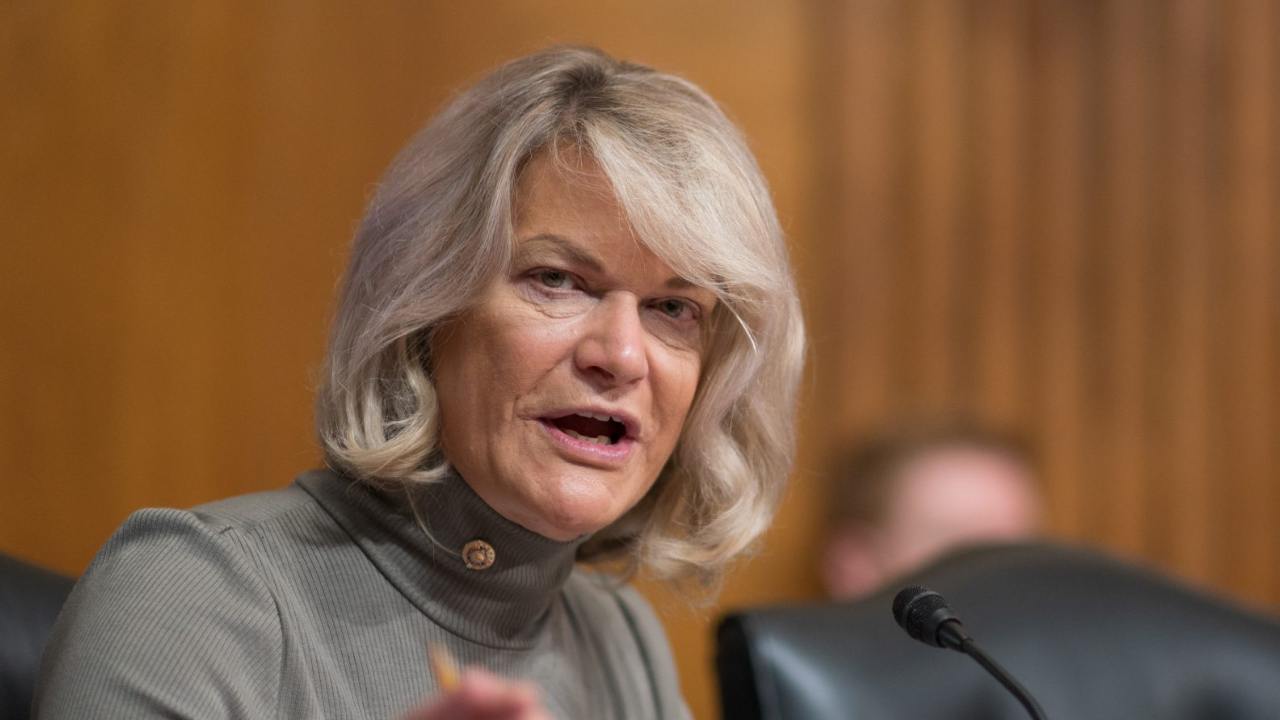
U.S. Senator Cynthia Lummis (R-WY) pushed back against criticism of the Digital Asset Market Clarity (CLARITY) Act, saying the legislation includes more than 16 provisions aimed at combating money laundering, sanctions evasion, terrorist financing, and other illicit financial activity. Her comments came after U.S. Senator Elizabeth Warren (D-MA) argued the bill would make those risks worse.
The exchange between the two lawmakers followed Warren’s response to a report alleging that a cryptocurrency exchange had become a major channel for illicit Iranian funds. Warren said the report showed that adversaries continue to use crypto to move billions of dollars and argued that the CLARITY Act would weaken efforts to stop those activities.
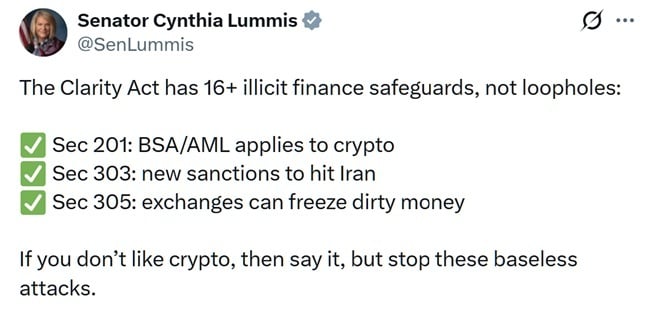
According to the senator from Wyoming, more than 16 illicit finance safeguards are baked into the legislation. Pushing back against claims of regulatory gaps, Lummis cited Sections 201, 303, and 305 as concrete mechanisms specifically designed to combat money laundering, choke off foreign sanctions evasion, and neutralize illicit financial networks.
While proponents like Senator Lummis champion these measures as robust safeguards, critics led by Senator Warren counter that the framework fails to go far enough. Opponents argue the current language creates dangerous blind spots by failing to adequately cover decentralized finance ( DeFi) protocols and digital asset mixers.
CLARITY Act Expands AML Rules, Sanctions Powers, and Law Enforcement Tools
Under the CLARITY Act, Section 201 would apply Bank Secrecy Act (BSA) and Anti-Money Laundering (AML) requirements to digital asset brokers, dealers, and exchanges by treating them as financial institutions. Covered firms would need compliance programs, risk assessments, compliance officers, employee training, independent audits, and Suspicious Activity Reports.
Sections 303 and 305 would strengthen the bill’s enforcement tools. Section 303 would establish new sanctions authorities targeting Iran and other high-risk foreign actors. Section 305 would allow crypto exchanges and stablecoin issuers to temporarily freeze suspected illicit funds while law enforcement obtains legal orders and would shield firms from civil liability when they act in good faith.
Citing the report alleging that a cryptocurrency exchange became a major hub for illicit Iranian funds, Warren stated on X:
“More evidence that our adversaries exploit crypto to move billions. The Clarity Act, as it’s currently written, would make this problem worse.”
Lawmakers continue to debate whether the bill strikes the right balance between establishing a regulatory framework for digital assets and strengthening protections against financial crime. Supporters say the measure gives regulators and law enforcement additional tools to combat illicit finance, while critics argue the legislation should include stronger safeguards.







Leave feedback about this