Key Takeaways
- Lummis vows to keep pushing the CLARITY Act despite its stalled progress.
- The CLARITY Act would strengthen crypto safeguards and enforcement.
- The lawmaker warns further delays could push comprehensive rules to 2030.
Lummis Renews CLARITY Act Push as Senate Action Slows
U.S. Senator Cynthia Lummis (R-WY) shared on X on Aug. 7 that she remains determined to advance the CLARITY Act while expressing frustration over its stalled progress. She indicated that lawmakers have invested too much work in a comprehensive U.S. crypto framework to stop now, pledging to work with Senate colleagues to advance it.
Lummis stated:
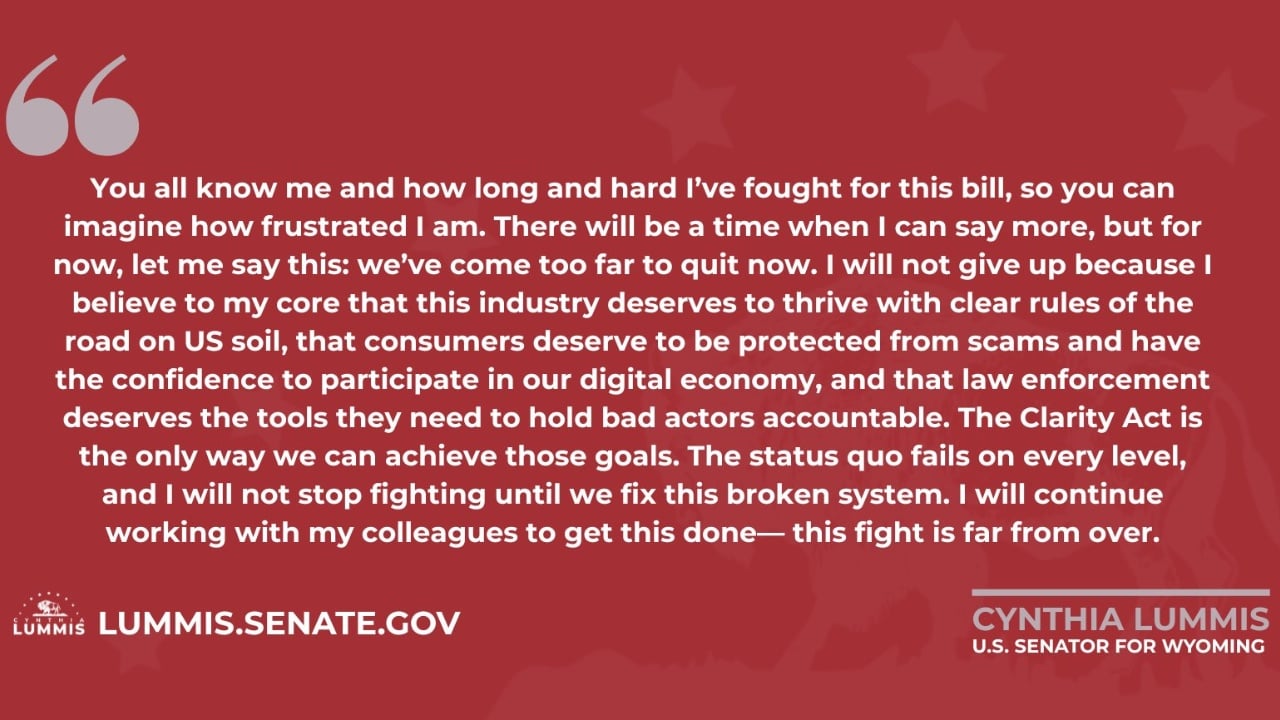
“You all know me and how long and hard I’ve fought for this bill, so you can imagine how frustrated I am. There will be a time when I can say more, but for now, let me say this: we’ve come too far to quit now.”
The Wyoming lawmaker tied that commitment to her view that digital asset companies need predictable federal rules to operate and expand in the United States. As chair of the Senate Banking Subcommittee on Digital Assets, Lummis has emerged as a key Senate figure driving the CLARITY Act, shaping negotiations and pressing lawmakers to bring it to a vote.
Just two days before her latest statement, Lummis expected senators to remain in Washington through the weekend to secure a CLARITY Act vote before the August recess. She described 11 months of negotiations that produced more than 300 pages of Democratic-requested changes, while talks continued over Commodity Futures Trading Commission provisions, law enforcement measures, and ethics rules for senior federal officials.
However, Senate Majority Leader John Thune (R-SD) confirmed on Aug. 7 that the chamber would delay a vote until September, after the August recess.
Consumer Protection and Enforcement Drive Lummis’ Case
Consumer protection formed another major part of Lummis’ Aug. 7 message, with the senator arguing that Americans need stronger safeguards against scams and greater confidence when participating in the digital economy. She connected those protections with clearer rules for legitimate businesses, presenting consumer security and domestic crypto innovation as priorities that can advance under the same federal framework.
The senator stated:
“I will not give up because I believe to my core that this industry deserves to thrive with clear rules of the road on US soil, that consumers deserve to be protected from scams and have the confidence to participate in our digital economy, and that law enforcement deserves the tools they need to hold bad actors accountable.”
Customer ownership during exchange failures illustrates one of the proposal’s most direct financial protections for people holding digital assets through intermediaries. The legislation would treat covered customer cash and crypto as customer property, require segregation from company assets, and address ownership disputes highlighted by Celsius, where roughly 600,000 Earn accounts held about $4.2 billion when bankruptcy proceedings began.
Bipartisan Progress Collides With a Lengthening Senate Timeline
Congress has already recorded substantial bipartisan movement on the proposal after months of negotiations over federal digital asset market structure. The Senate Banking Committee advanced H.R. 3633, the Digital Asset Market Clarity Act of 2025, by a 15-9 vote on May 14, moving the legislation beyond the committee stage.
Lummis noted:
“The CLARITY Act is the only way we can achieve those goals. The status quo fails on every level, and I will not stop fighting until we fix this broken system.”
More than a year after the House approved the legislation, Senate action remains central to whether comprehensive federal market-structure standards become law. The unresolved framework affects digital asset classification, registration requirements, federal oversight, and the operating environment for exchanges, developers, asset managers, and financial institutions.
Earlier warnings from Lummis placed a much longer timetable around congressional action if lawmakers fail to complete the legislation during the current window. She has argued that another realistic opportunity could slip toward 2030, potentially leaving consumers, developers, exchanges, and enforcement authorities operating under the existing federal structure for years.
Updated CLARITY Act Shows Work Continued Before Latest Setback
Legislative work continued ahead of the latest slowdown, showing that senators were still refining the framework shortly before Lummis issued her Aug. 7 message. On July 22, Lummis released updated CLARITY Act text combining work from the Senate Banking and Agriculture committees, bringing separate elements of the Senate’s digital asset market-structure effort into a revised proposal.
The revised text also reinforces Lummis’ central role in the legislative effort, extending her work on market structure beyond public calls for congressional action. Her latest message places that work alongside three priorities she continues to emphasize: creating workable rules for legitimate crypto businesses, protecting Americans participating in digital markets, and equipping authorities to pursue fraud and other illicit activity.
Lummis concluded:
“I will continue working with my colleagues to get this done— this fight is far from over.”
With the updated legislative text already released and committee action completed, the focus now shifts to whether Lummis and other senators can turn months of negotiations into broader congressional support when the Senate returns in September.







Leave feedback about this