
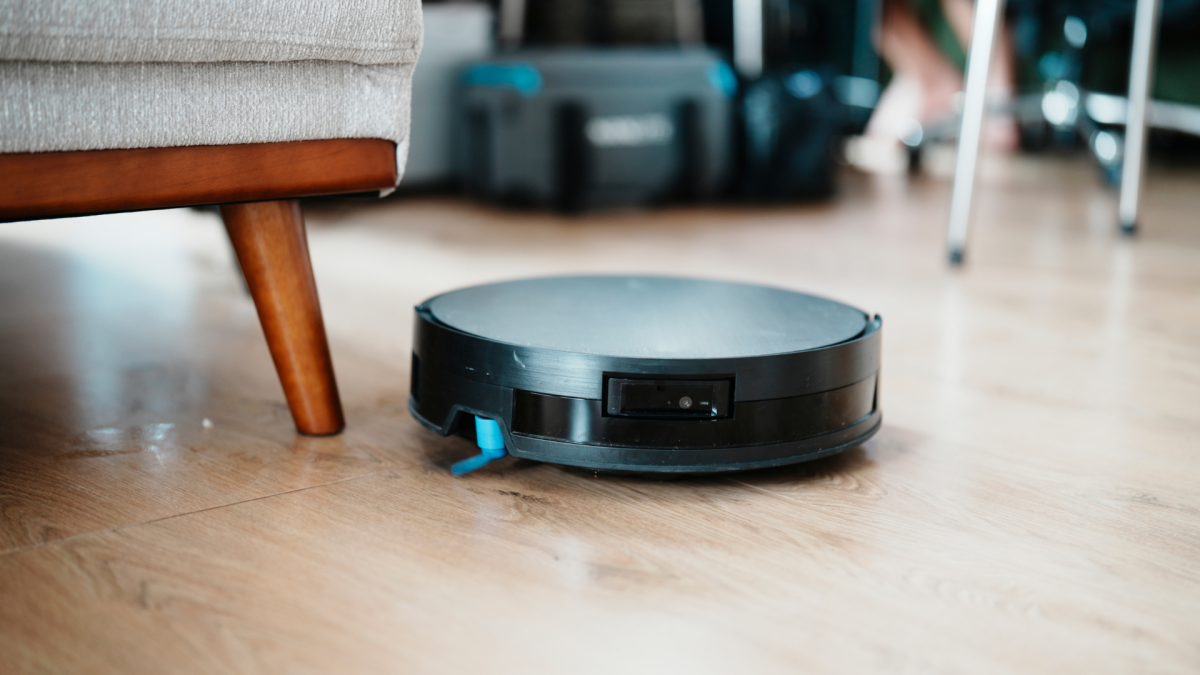
The U.S. Federal Communications Commission (FCC) has banned all foreign-made mobile robots from the country — including robot vacuums. This means that people in the U.S. won’t be able to get new robot vacuums from brands such as Roborock, Ecovacs, Dreame, and Samsung.
On Tuesday, the FCC announced that it has added “advanced robotic devices” made outside the U.S. to its Covered List. This list documents communications equipment and services that the U.S. government believes pose an “unacceptable risk” to national security. Products on the Covered List are prohibited from receiving FCC equipment authorisation, which is mandatory for most electronic devices imported or sold within the country.
As such, this update means that foreign-manufactured advanced robotic devices cannot be imported or sold in the U.S. The FCC’s announcement specifically mentioned limbed robots such as humanoids and quadrupeds, leaving no doubt that tech such as XPENG’s humanoid IRON robot and Unitree’s Go2 Pro Robot Dog will be barred from the country.
However, robot vacuums also neatly fit within the ban’s scope. As cited by the FCC, the National Security Determination defines “advanced robotic devices” as:
A mechanical mobile device, including autonomous mobile robots, humanoid robots, and quadrupeds, that –
i. Is capable of locomotion, obstacle avoidance, navigation, or movement on the ground;
ii. Operates at a distance from a human operator or supervisor based on commands or in response to sensor data or any combination thereof; and
iii. The combined weight of the device and, if applicable, ground station or docking station is over 4.4lbs; and
iv. Contains a component falling within each of the below subparagraphs:
i. a sensor capable of perceiving its environment;
ii. a component that is capable of providing network connectivity (wired or wireless, including Bluetooth/WiFi, cellular, or satellite) with connection speeds of at least 200 kbps in either direction; and
iii. software running either locally or remotely, including firmware and AI or machine-learning model weights, that controls the robot’s autonomous navigation or movement perception, data collection, or remote command-and-control
Such features are integral to robot vacuums’ operations, which require them to independently navigate areas in order to clean them. The FCC has since confirmed that the U.S. ban does include robot vacuums, as reported by The Verge.
Mashable has reached out to Roborock, Ecovacs, Dreame, and Samsung. At the time of writing only Roborock has responded, and they declined to comment.
Mashable Light Speed
The National Security Determination also specifically referred to an incident involving a robot vacuum when outlining the U.S. government’s concerns. Earlier this year, a software engineer accidentally hacked his DJI Romo robot vacuum and gained access to video, audio, and map data from thousands of devices across the world. (DJI devices have already been barred from the U.S. for some time, the government having classified it as a “‘Chinese military company.”)
Security vulnerabilities such as this aren’t exclusive to foreign-made devices, and aren’t necessarily an indication of sinister intentions. U.S. companies such as Amazon, Meta, and Uber have all experienced their own safety and security incidents as well. No technology is infallible, regardless of where it was made or who it was made by. Even so, the U.S. government considers such incidents in foreign technology as demonstrative of a national security threat.
“The networked capabilities of advanced robotic systems create extensive vulnerabilities and vectors for attacks that can manipulate the data and physical operation of the advanced robotic system,” the National Security Determination reads. “Relying on foreign-produced advanced robotic devices presents unacceptable supply chain and cybersecurity vulnerabilities.”
Fortunately, the U.S. robot vacuum ban won’t force you to throw out your current device. The FCC states that consumers are still allowed to use devices they already own, so there’s no need to rush out to look for a replacement. The ban doesn’t revoke FCC authorisation from previously approved devices either, meaning those in the U.S. can continue to buy and sell robot vacuum models that are already in the market.
However, new robot vacuums that have not yet received FCC authorisation are now barred from entering the country, leaving U.S. consumers with older models and significantly fewer options. The vast majority of robot vacuums are made outside the U.S., with the top five manufacturers based in China. Combined, these five companies held almost 70 percent of the global robot vacuum market share as of 2025.
In comparison, the U.S. has practically no robot vacuum companies. While Roomba maker iRobot was founded in California, the company filed for bankruptcy last year and was acquired by Chinese robotics company Picea.
The Department of War (DOW) and Department of Homeland Security (DHS) are authorised to grant exemptions to the U.S. robotics ban upon conducting a national security assessment. However, the FCC does not list any at time of writing.
Earlier this year, the FCC banned all foreign-made consumer-level WiFi routers, also labelling them a danger to national security. The vast majority of routers are manufactured outside the U.S., including those from trusted brands such as TP-Link, ASUS, and Netgear.
Topics
Robot Vacuums
Robotics






Leave feedback about this