
Key Takeaways
- U.S. Bitcoin hashrate share fell 0.823% in 2026, with roughly 55 EH/s lost.
- Russia and China gained Bitcoin mining share despite losing 13 EH/s and 10 EH/s, respectively.
- Bitcoin hashprice jumped 27.42% in 30 days, potentially attracting new miners worldwide.
U.S. Mining Dominance Slips as Russia and China Grab Bigger Slices
Bitcoin’s total hashrate was a lot higher at the start of 2026, and the data shows that all of the countries saw hashpower losses between Q1 and Q3. It’s a hair over eight weeks into Q3, with five weeks left of the quarter, and while the U.S. lost a modest share, it is still the most dominant country in terms of bitcoin mining.
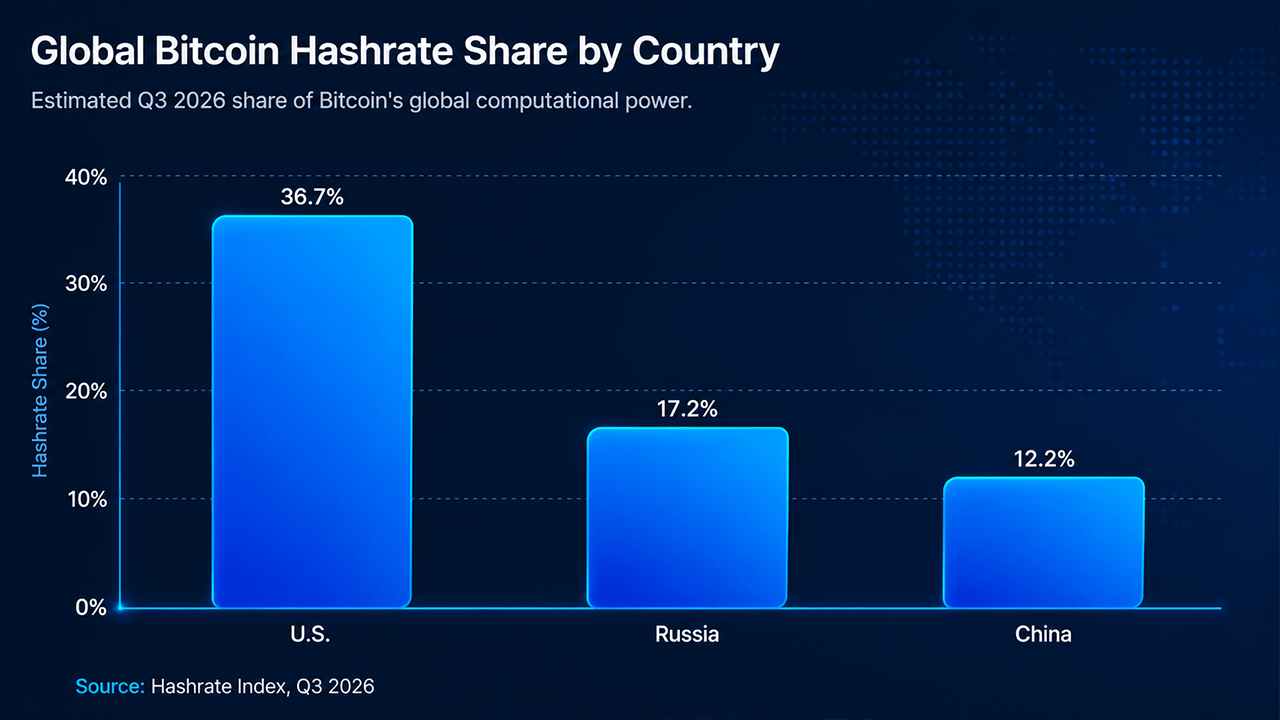
The U.S. started the year off with 37.523% of the network’s total, and today, it is down 0.823% to the current 36.7%, according to hashrateindex.com hashrate heatmap stats. Russia, which commands the second largest share of the global hashrate, started the year off with 16.417% of the network. As of today, Russia’s stake in Bitcoin’s computational power stands at 17.2%.
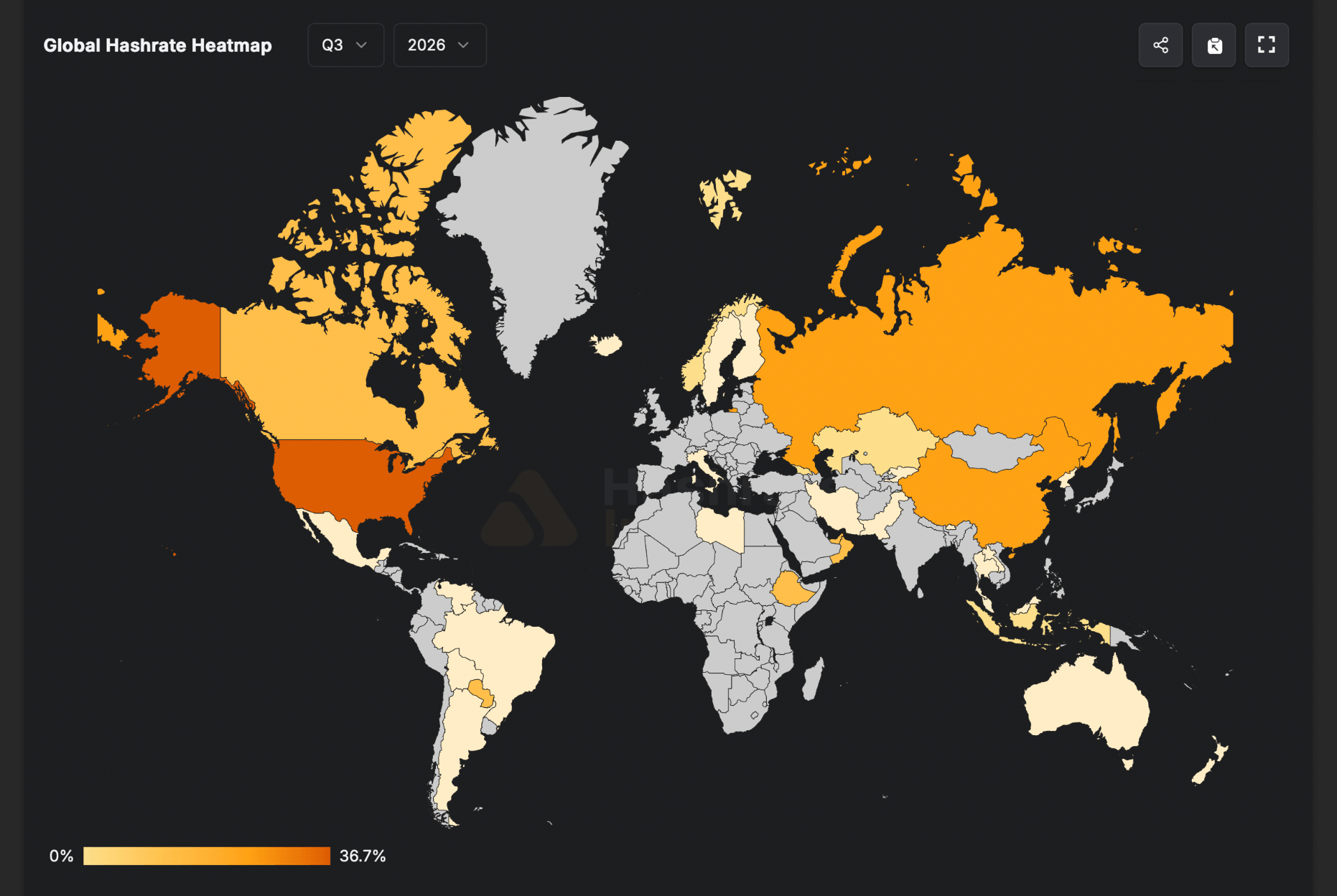
Still, the Russian Federation had 175 EH/s in Q1, and currently the country holds around 162 EH/s, a loss of around 13 EH/s over the last 238 days. Another mining titan, China, saw an increased share of Bitcoin’s global hashrate from 11.276% to 12.2%. China also went from 125 EH/s to 115 EH/s, logging an overall loss.
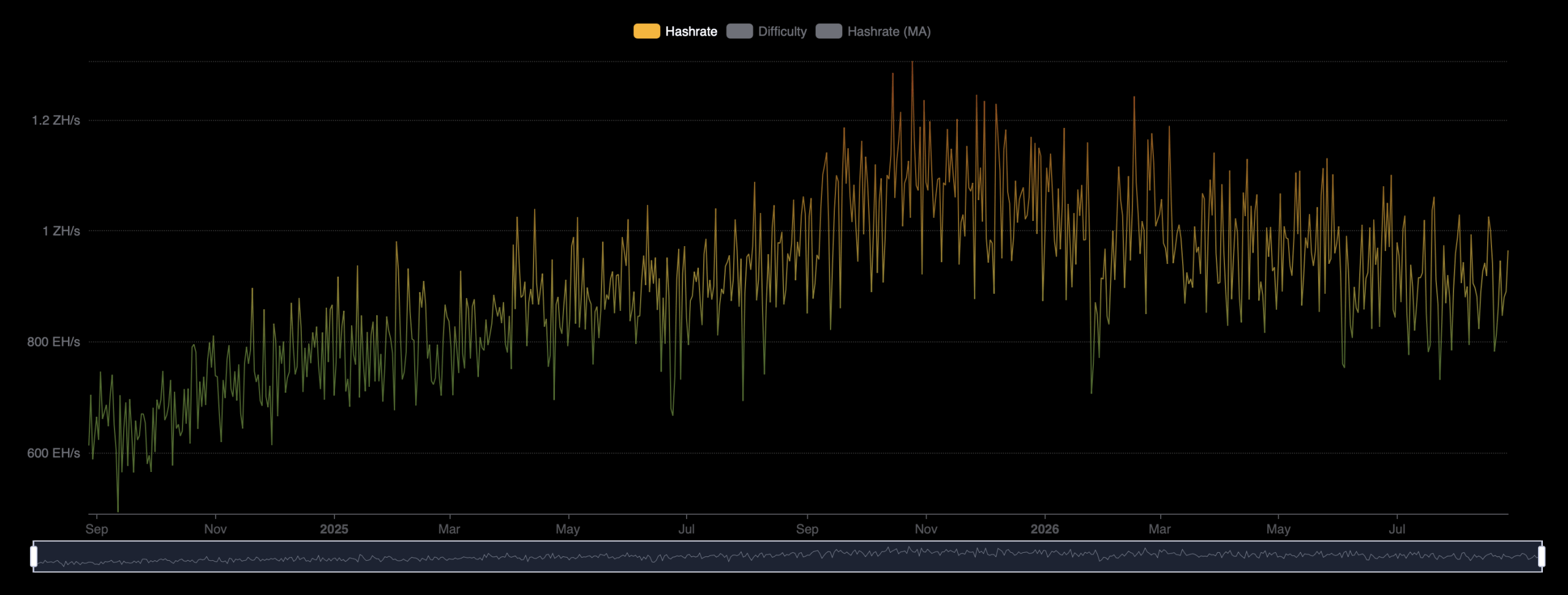
Basically, the hashrate was higher across the board at the start of 2026 and well above the 1,000 EH/s mark. Today, as of Aug. 27, 2026, Bitcoin’s total computational power stands at 892.35 EH/s. Canada saw a modest drop in overall hashrate when it started at 2.627% in Q1 and 2.6% currently. The country lost around 4 EH/s during the last 7.82 months of the year.
Paraguay Bucks the Trend as Other Mining Hubs Lose Ground
A bigger contender than Canada, Paraguay, saw a rise in its global share, jumping from 4.034% to 4.7%. Paraguay managed to actually gain 1 EH/s of total hashrate since the start of the year. Other global leaders saw drops in both hashrate and their share of the global pie. Kazakhstan, for instance, slid from 2.064% of the global share to 1.6% and Oman went from 3.002% to 2.8%. In Q1, Ethiopia was behind 2.58% of Bitcoin’s computational power, but today, it’s down to 2.4%.
Other countries encompassed in the heatmap mix include Mexico with 0.4% or 3.5 EH/s, Australia produces around 0.3% or 3 EH/s, Norway has 1.7% or 16 EH/s, and Indonesia has around 1.8% or 17 EH/s. The United Arab Emirates (UAE) commands 3% or 28 EH/s, Georgia has 1.2% or 11 EH/s, Iran has 0.2% or 2 EH/s, Pakistan stands with 0.3% or 2.5 EH/s, and Japan has 0.05% or 0.5 EH/s of the global hashrate share.
Rising Hashprice Could Further Reshuffle Bitcoin Mining’s Global Map
While modest, the data shows that Bitcoin’s hashrate has seen a global shift over the past 238 days, and this could very well continue. Right now, hashprice or the revenue miners make on a daily basis, has grown a great deal larger. This could attract all kinds of new entrants into the mining industry from all around the world. The spot value of a single petahash per second (PH/s) 30 days ago stood at $31.66, and it has since increased by 27.42% to the current $40.34.










Leave feedback about this