
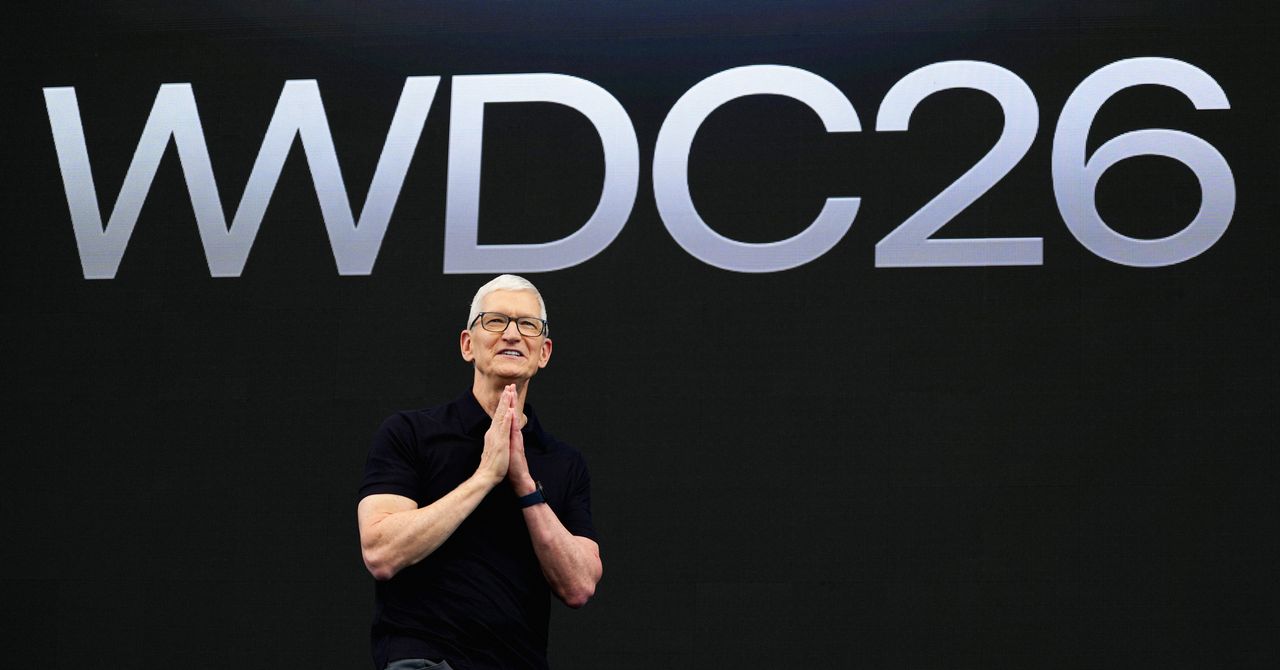
Apple held its annual Worldwide Developer Conference today. WWDC is the event in which the company uses its keynote address to announce lots of changes coming to its software platforms on iPhone, iPad, Apple Watch, and Mac.
Apple has been chasing the artificial intelligence boom for the past few years, though many of its promised AI features across its platforms have been delayed or have not quite panned out into a fully-fledged suite. To rectify that, Apple entered into a partnership with Google to use its Gemini AI as a backbone to power Apple Intelligence. After years of wondering how that partnership might manifest, Apple revealed that vision today.
Apple’s software chief Craig Federighi said that Apple’s keynote presentation would focus on three main things: Platform improvements, updates in trust and safety, and a “big leap forward” in Apple Intelligence and Siri. The big focus was changes to Apple’s Siri virtual assistant that make it feel more like a modern AI chatbot. The rest of the AI features have been implemented broadly across Apple’s ecosystem, in iOS, iPadOS,MacOS, WatchOS, and VisionOS.
This was also the final WWDC for outgoing CEO Tim Cook, who signed off on a personal note, saying, “I still believe the best is yet ahead.”
Here’s everything Apple announced today at WWDC 2026.
AI Architecture

Courtesy of Apple
When the slate of new software updates arrive in the fall, Apple’s AI models will be integrated with Google’s Gemini to enhance the conversational ability and contextual awareness of its apps. That means all of Apple’s apps that use AI—which goes beyond the Siri voice assistant to include Mail, Messages, Safari, and Photos, among others—will have a better understanding of what you’re trying to do, and will be better at delivering results that feel meaningful.
These AI powered features will be accessible in some way on all of Apple’s devices. The AI features will also be able to peer into what’s stored on your devices, what’s on the screen, and what the camera is seeing to answer questions, generate text and images, and perform the basic tasks you ask it to do.
Apple, which has long emphasized its privacy bonafides, says much of this computational labor happens on the actual device (so it will likely be limited to only the highest performing recent hardware) and when it has to send a request to the cloud, it does so securely.





Leave feedback about this